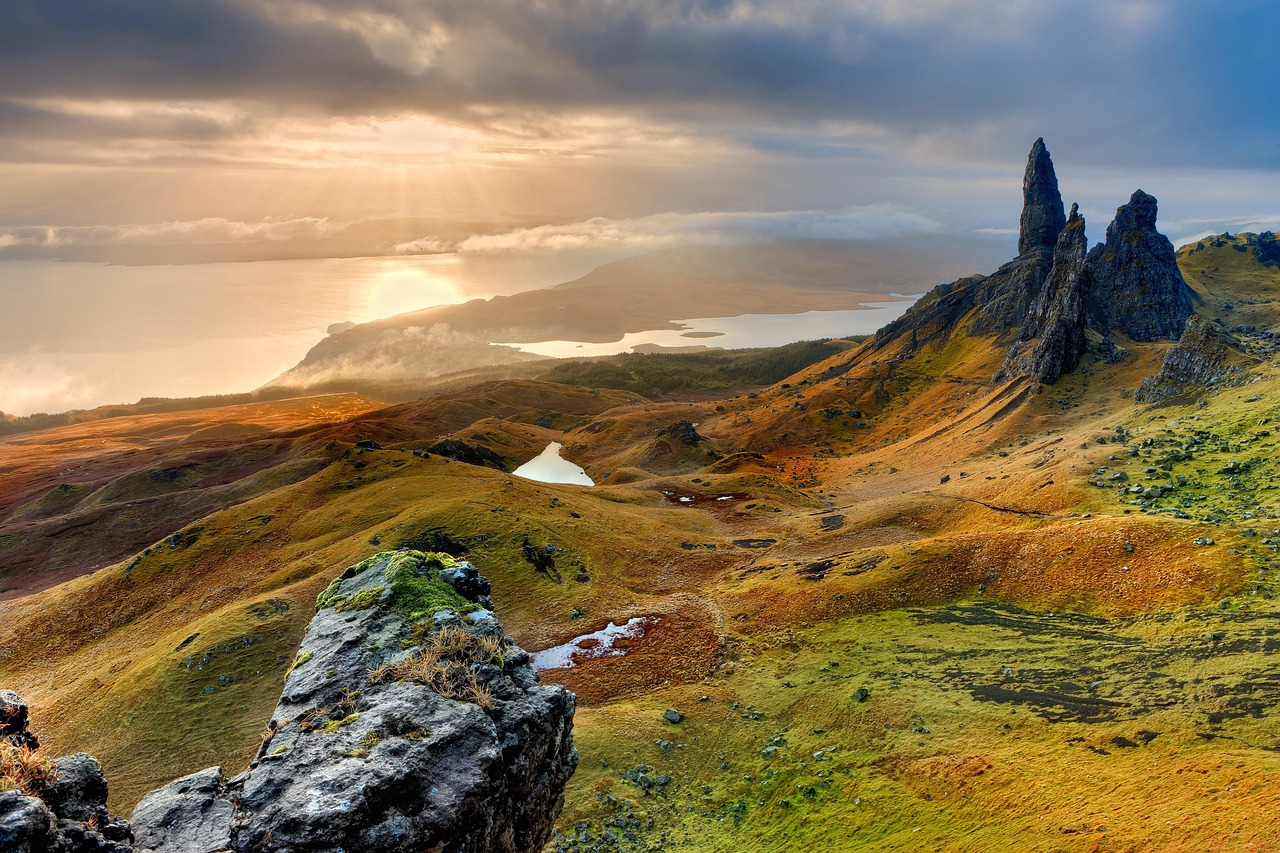
The Isle of Skye is more than just a destination; it is an experience. The largest and most famous island of the Inner Hebrides, Skye is a place where legends cling to the mist-shrouded peaks, and the landscape is so dramatic it feels pulled directly from a fantasy novel.
With its ethereal geology, rugged mountains, deep history, and world-class single malt whisky, Skye is the magnetic centerpiece of any Scottish journey.However, Skye’s wild popularity can make planning challenging. Roads are narrow, accommodation is scarce, and the weather is unpredictable. Fear not!
This is your Complete Guide to the Isle of Skye for first-time visitors, detailing exactly what to see, the best activities, and where to lay your head after a long day of hiking.
Part 1: Getting to the Isle of Skye (Logistics)
Skye is surprisingly accessible, but proper planning is essential, especially regarding timing and transportation.
Driving Across the Skye Bridge
The easiest and most common way to access the island is by driving across the Skye Bridge. This iconic crossing is free and connects the mainland village of Kyle of Lochalsh directly to the island’s southern region of Kyleakin. This is the route you’ll take if driving from major hubs like Inverness, Edinburgh, or Glasgow, and it’s the fastest way to get your adventure started. It is highly advisable to ensure your rental car is booked well in advance, as is the case with all of Scotland, and especially if you require an automatic vehicle. The drive itself, particularly the stretch from Loch Cluanie and past Eilean Donan Castle, is spectacular, serving as the perfect appetizer for the rugged scenery that awaits.
The Mallaig Ferry: A Scenic Alternative
For a truly scenic approach, take the ferry. The CalMac ferry runs from Mallaig (the mainland terminus of the famous Jacobite Steam Train, the ‘Hogwarts Express’) to Armadale on the Sleat Peninsula (the south of Skye). This approach is slightly slower but highly rewarding, offering breathtaking views back towards the mainland mountains and providing a more traditional island experience. If you are taking a car, reservations on this ferry are absolutely mandatory, especially during the peak summer months, as vehicle spots fill up weeks or even months ahead of time.
Public Transport Options
While having a car provides maximum freedom, you can access Skye using public transport. Scottish Citylink coaches run from Glasgow, taking you directly to Portree and other main towns. Once on the island, local bus routes connect the main villages, but coverage to the remote hiking trailheads is very limited. If relying on public transport, you may need to use local taxis or book organised day tours to reach key attractions like the Quiraing.
Part 2: The Must-See Geological Wonders (What to See)
Skye’s incredible landscape is defined by the Trotternish Ridge, a massive landslip that created its most famous and fantastical structures.
1. The Old Man of Storr
This is the most iconic sight on the island, and a quintessential Scottish hike. The Old Man is a dramatic, jagged rock pinnacle that dominates the landscape north of Portree. The hike is moderately challenging, usually taking around 1.5 to 2 hours round-trip, but the well-maintained path and relatively short distance make it accessible to most fitness levels. Start early in the morning to capture the best light on the pinnacle and avoid the midday crowds which can be substantial at the car park.
2. The Quiraing
Arguably the most geologically dramatic place on Skye, the Quiraing is a complex of towering plateaus, steep slopes, and bizarre rock formations resulting from the ancient landslip. The full loop hike (around 4-5 hours) is spectacular but can be challenging, muddy, and exposed. Alternatively, you can enjoy the incredible views from the scenic parking lot at the top. The drive itself, part of the famed Trotternish Loop, is unforgettable, offering views over the sea towards the mainland and the Outer Hebrides.
3. The Fairy Pools
Located near the village of Carbost, the Fairy Pools are a series of crystal-clear, cascading waterfalls and pools at the foot of the Cuillin Mountains. The short, relatively easy walk (about 40 minutes each way) takes you alongside the clear water, which glows a luminous blue on a sunny day. They are a popular spot for photography and, for the very brave, wild swimming—though be warned, the water is always icy cold! Ensure you wear waterproof footwear as the path is often muddy and crosses minor streams.
4. Neist Point Lighthouse
Situated on the island’s westernmost peninsula, Neist Point is famous for its stunning coastal views and dramatic cliffs. A short, steep walk leads you down to the iconic Neist Point Lighthouse, offering one of the best locations on Skye for sunset views. It is also one of the prime spots on the island for viewing whales, dolphins, and basking sharks in the waters below, making the journey well worth the effort.
5. Kilt Rock and Mealt Falls
This dramatic coastal viewpoint showcases two magnificent features in one spot. Kilt Rock is a sea cliff that resembles the pleats of a Scottish kilt, formed by basalt columns. Tucked right next to it, Mealt Falls plunges 60 meters directly into the Atlantic Ocean below. There is an accessible parking lot and viewing platform right off the main road, making it an easy and rewarding stop on the Trotternish Loop.
Part 3: History, Culture, and Activities (What to Do)
Skye is not just about natural scenery; it has a deep history, a vibrant local culture, and world-class produce.
6. Visit Talisker Distillery
Located in the charming village of Carbost, Talisker is the only distillery on the Isle of Skye. It produces a famed Single Malt whisky known for its smoky, peaty character with a touch of sea salt and pepper—a perfect reflection of its wild coastal location. Taking a tour and tasting is a fantastic way to warm up and learn about the local craft. Be sure to book your tour slot online well in advance, especially during the peak season.
7. Explore Dunvegan Castle and Gardens
Located in the northwest of the island, Dunvegan Castle is the oldest continuously inhabited castle in Scotland and the ancestral home of the Chiefs of Clan MacLeod for over 800 years. The castle is famed for housing the legendary Fairy Flag and offers guided tours through its historic rooms. The beautiful Victorian gardens provide a gentle contrast to the rugged wilderness outside. Boat trips to see the local seal colony often depart from the castle jetty.
8. Discover the Capital of Portree
Portree is the largest town and cultural hub of Skye, easily recognized by its famous semi-circle of colourful harbourside houses. This is the best place to stock up on essentials, enjoy a proper meal, or simply stroll along the bay. It is often used as a central base for exploring the island and offers the widest selection of restaurants, pubs, and shops selling local goods and crafts.
9. Step Back in Time at the Museum of Island Life
Located in Kilmuir, this small but fascinating open-air museum provides a true glimpse into what life was like for islanders in the 19th and early 20th centuries. The collection of restored thatched cottages and displays of everyday tools, furniture, and clothing offers a poignant look at the resilience of traditional Gaelic culture. It is an excellent educational stop before heading to the nearby Fairy Glen (a charming miniature landscape of grassy, conical hills).
Part 4: Where to Stay on Skye (Accommodation Guide)
Accommodation on Skye is limited and highly competitive. Booking 6 to 12 months in advance is strongly recommended, particularly for the summer months.
Portree: The Hub
- Best for: First-time visitors, those without a car, access to amenities, and dining options.
- Pros: Central location, widest choice of hotels and B&Bs, and the island’s best infrastructure.
- Cons: Can be noisy, and limited parking.
Broadford: The Gateway
- Best for: Those arriving late via the Skye Bridge, or those planning to explore the south end first.
- Pros: Good selection of accommodation, often slightly easier to book than Portree, and the first major settlement you hit after the bridge.
- Cons: Less character than Portree, and a longer drive to the northern attractions (Storr, Quiraing).
Dunvegan and the North West
- Best for: Tranquil, remote stays, and proximity to Dunvegan Castle and Neist Point.
- Pros: Very peaceful, authentic local atmosphere.
- Cons: Limited dining options (reservations essential), and long drives to other key sites.
Accommodation Types to Consider:
- B&Bs and Guesthouses: Offer the most authentic Scottish hospitality and often include a legendary Scottish breakfast.
- Self-Catering: Cottages and holiday lets are great for families or groups, offering kitchen facilities.
- Hotels: Range from traditional inns to boutique options, mostly found in Portree and Broadford.
- Campsites: Available for those touring in motorhomes or tents, but they fill up very quickly.
Part 5: Essential Skye Travel Tips
Master the Single-Track Roads
The majority of the roads leading to Skye’s main attractions are single-track—only wide enough for one vehicle.
- Passing Place Etiquette: These roads have frequent passing places (small lay-bys). If you see an oncoming car, or a faster car behind you, immediately pull into the nearest passing place on your left to let them pass. If the passing place is on your right, stop opposite it and let the other car pull in. Never park in them! Be quick and courteous.
Prepare for the Midges
If you are visiting between late May and September, be prepared for the Scottish midge (a tiny biting fly). They are most active during calm, overcast conditions and around dawn and dusk.
- Defence: Wear long sleeves and trousers in the evenings. Use a strong repellent—many locals swear by the chemical DEET or the famous Avon Skin So Soft body oil.
Fuel Up Regularly
Petrol stations are few and far between on the island, particularly outside of Portree and Broadford. Always top up your tank when you see a filling station, as you may drive a long distance before you see the next one.
The Isle of Skye is an overwhelming combination of raw beauty and ancient mythology. By planning your accommodation and transportation in advance, you’ll be ready to embrace the mist, the mountains, and the magic of this truly unforgettable Scottish destination. Slàinte!